The Land That Bore Me
A trusted teacher door knobbed me recently by saying I’m attracting people into my life who are like I am. . . and it wasn’t a compliment. ‘Door knobbing’ is a term used in the therapy world to describe the revelation of something seismic just as you’re heading out the door — or in the era of communications via screen, as you’re about to click the ‘end meeting for all’ button. “Oh, and by the way, I’m pregnant with triplets. See you next week!”
A spiritual view might propose that everyone we come into contact with serves as a mirror, simply reflecting back to us what’s there — the good, the bad and the ugly. We love those who reflect what we like about ourselves, make voodoo dolls of those who show us our darker corners, vulnerabilities, and the parts we may have disowned. All reflections are potentially useful, depending on how we relate to them. The doorknob reflection I received camped out in my head for days. While these types of reflections can be confronting (‘what? I have flaws?!’), we are wise to open ourselves to whatever these reflections might have to teach us.
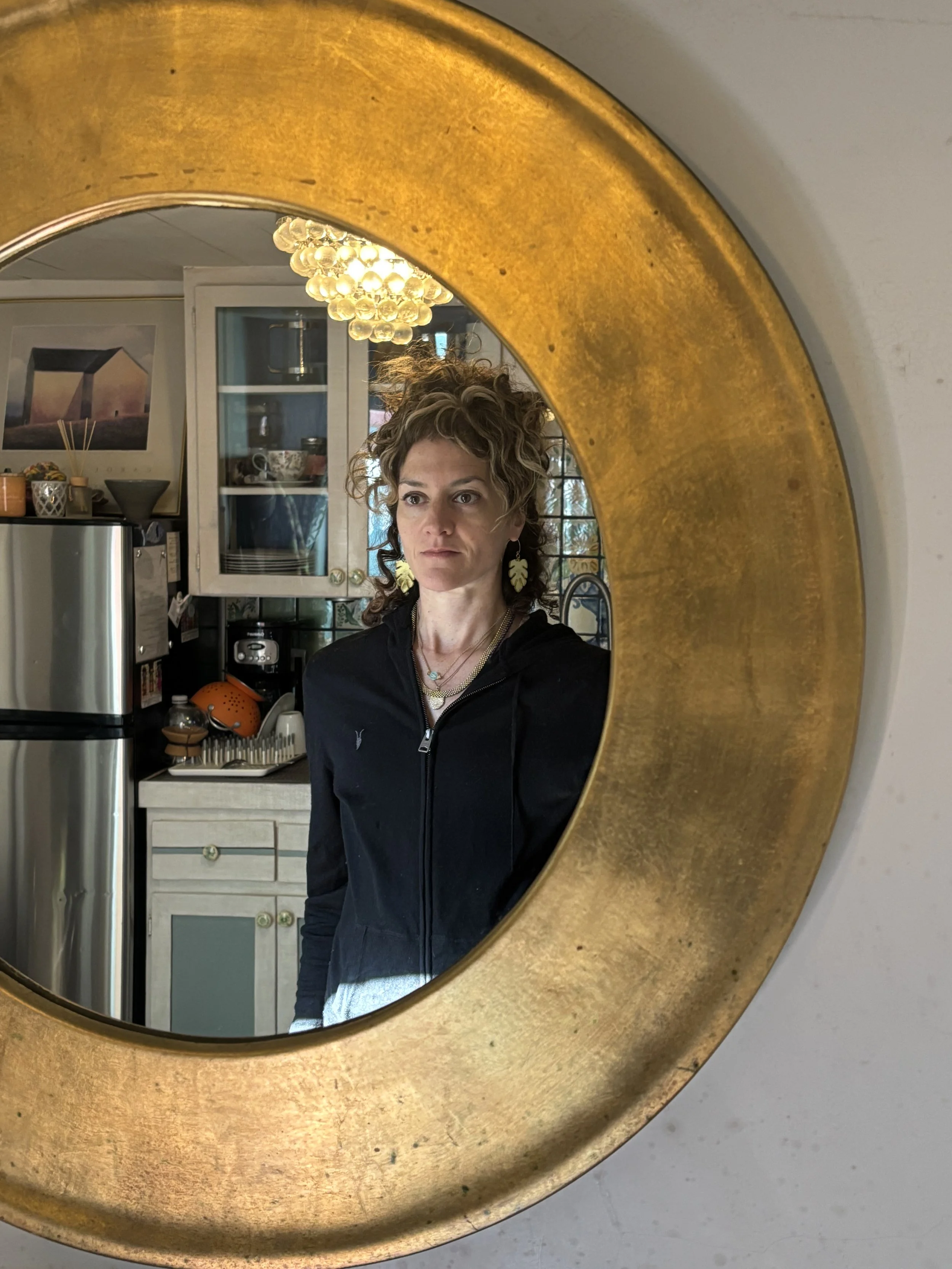
Repetition and pattern abound in the natural world — the roots of a tree and the veins in a leaf are echoed in the veins that run through our bodies. The spiral of a snail shell is the same shape as the spiral shape of the galaxy. The shape of a butterfly is the same shape as a human pelvis. The universal can be found in the individual, the world in a grain of sand, etc. This kind of repetition is found within all of the systems that organize humanity and the rest of nature - from the micro to the macro. How are the conflicts unfolding relentlessly on the national and global stage represented in the conflicts of our relationships, families, workplaces or neighborhoods? Are there reflections of us that we might be wise to consider when considering the monsters who have risen to power in our country?
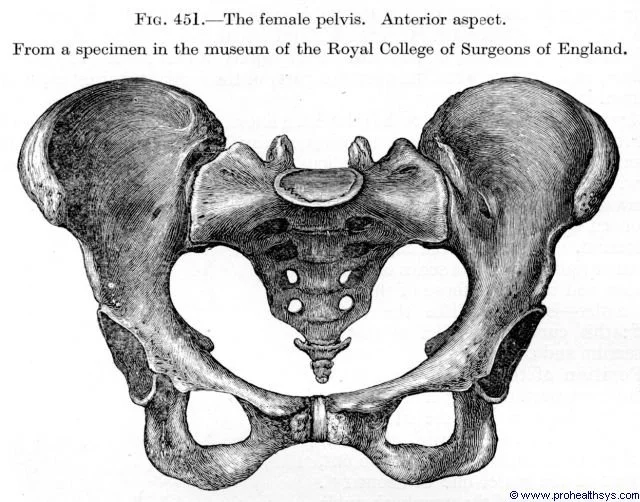
Our current national identity crisis and the stark divisions it has wrought (or revealed) between us have inspired me to think about our beginnings. We arguably have little to no control over our beginnings — they are, instead, dictated by destiny, karma, or the randomness of the universe, depending on your world view. Again, a spiritual perspective might suggest that we do indeed choose our beginnings - where, when, and into what circumstances we come into this life — all of these choices informed by the motive to evolve our souls. Through both adversity and advantage, naughty and nice, we are here to learn - no pain, no gain and all that. This is a theory that I’ve entertained, but have never been able to fully reconcile; it seems to entitle the privileged with their good fortune, while somehow attempting to justify the fate of the disenfranchised.
Either by destiny or choice, each of us is born into a certain time, geographical location, country, culture, religion, language, neighborhood, family — all of these systems exerting their energies upon us, shaping who we are and aren’t, how we think and feel, where our sensitivities lie, what we’re able to perceive, and where our blind spots are. We become diamonds, pearls, lumps of coal or piles of dust — as pressure, heat and other forces act upon us. We may imitate our primary attachment figures, or see them as cautionary tales and fashion ourselves as their opposite.
pearl in an oyster shell
A tree on the coastline is bent by the winds that blow on it, day after day, year after year; would we condemn the tree for being bent in one direction, or honor its adaptive response? We all have both adaptive and maladaptive responses to our environments. These responses at first help us survive — and ultimately become habits. These habits often outlive their utility — at which point they become hinderances to our growth and evolution. The tree bending is yielding to the wind, reshaping itself instead of snapping in half: adaptive!
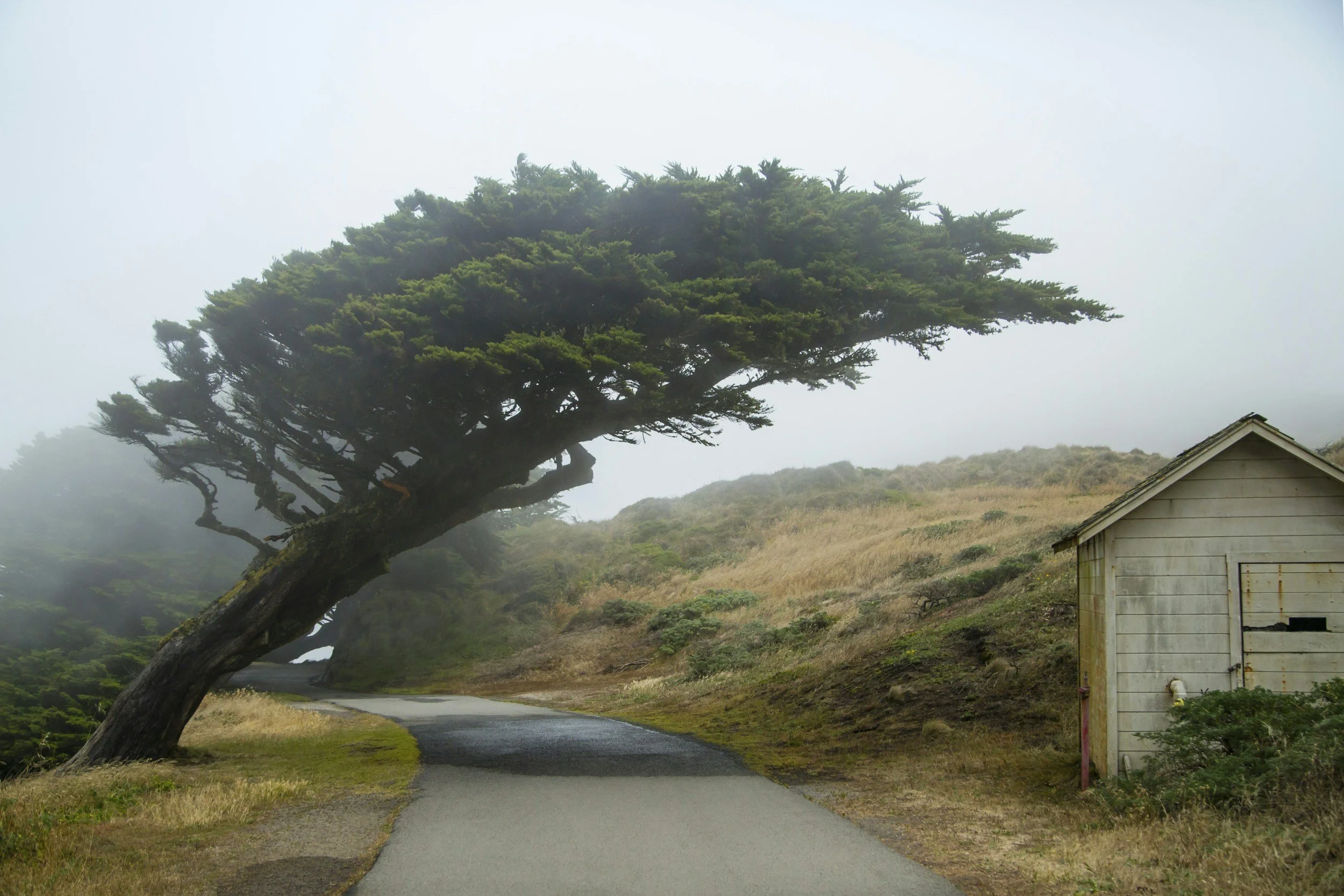
Are we doers, or are we simply done-to? Or both? A glacier shapes the landscape by abrading the rock that lies beneath, carrying bits of earth and depositing that material elsewhere. Our experiences - including the miserable ones - have a transformative power similar to the moving glacier. What is the role of the individual in this type of topographical makeover? How do we adapt to being abraded, carried, and deposited someplace new? While we arguably have little to no control over whether we were born in the Ninth Ward or at Mar a Lago, recognizing which habits continue to be useful and those which may be keeping us stuck is where we have agency. Similarly, how we respond and relate to whatever circumstances we find ourselves in may be where we have an opportunity to choose.
The pueblo people in New Mexico were among those who believed that the role of humans was to mediate between the heavens and the underworld. A more ego-centric self-understanding, like that promoted in our culture, might suggest that we are ends rather than mediums — that we are music rather than instruments.
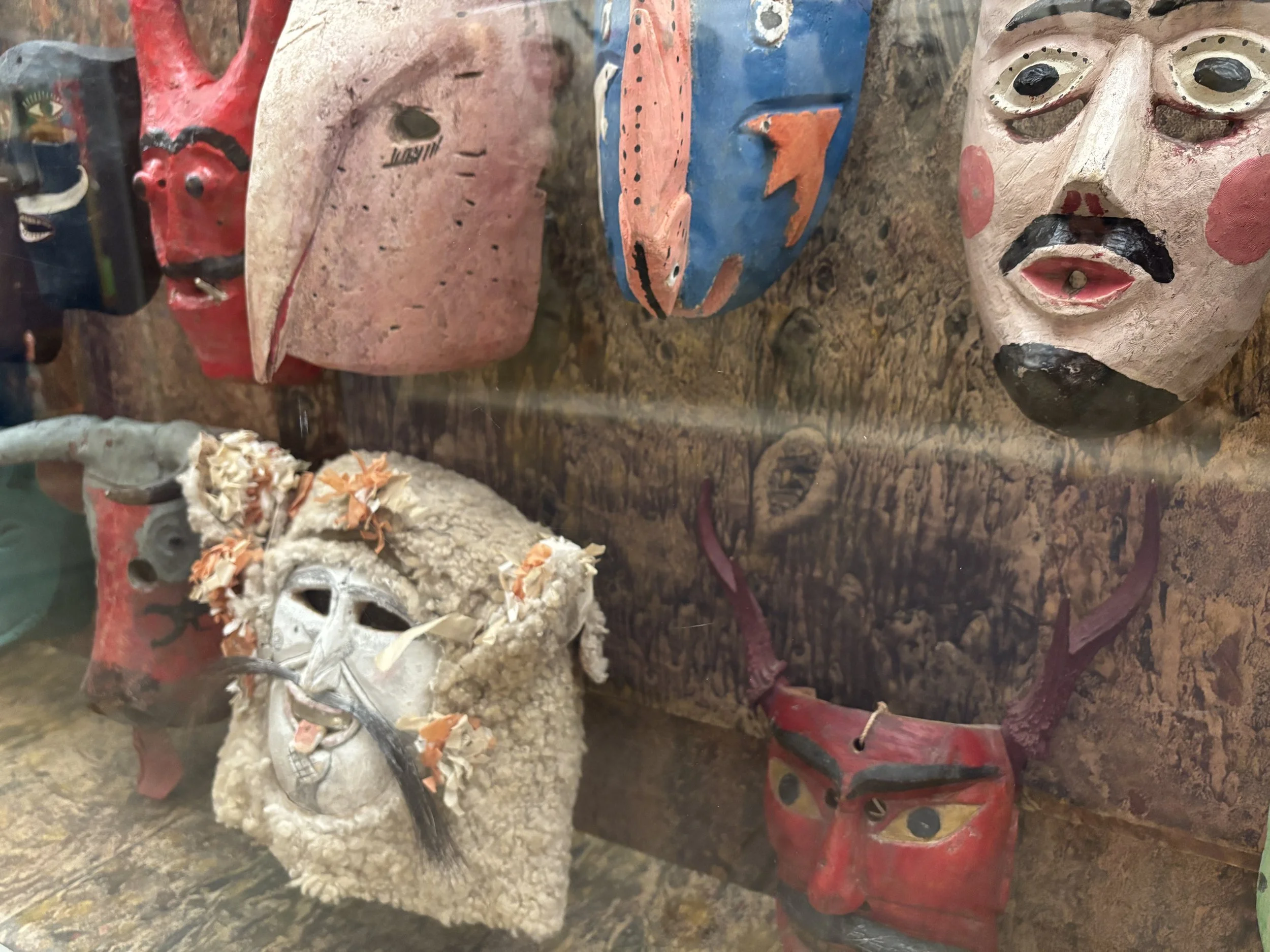
Masks are used to mediate the connection between the human and spirit worlds.
The mythology of U.S. consumer Capitalism teaches us that everything is within our control; that if we don’t get what we want, it is because we haven’t worked hard enough or found the right object to blame. It teaches that power resides in one’s ability to acquire and accumulate material wealth. Generations of history would suggest that there is more enduring wisdom in respecting the limits of one’s agency: knowing when to act and when to yield or surrender. This is the same type of wisdom that helps us evaluate and calculate risk. I was crossing a famous mountain pass in Colorado recently and was reminded of the young man who, in 2024, attempted to jump the highway on skis. Tragically, he did not succeed.
That being said, without taking calculated risks, we sacrifice the opportunity to realize our full potential. Taking ill-considered risks can lead to other calamities. The degree and type of risk to which we are willing to expose ourselves to speaks volumes about our self-assessment, our nature, and our origins. Our biology and the rest of nature serve as a kind of referendum on action and yielding, and on understanding limits: a volcano gives passage to molten lava, a river carves a path through a wall of rock. Neither is winning or losing; they are forces either acting or yielding in the service of transformation.
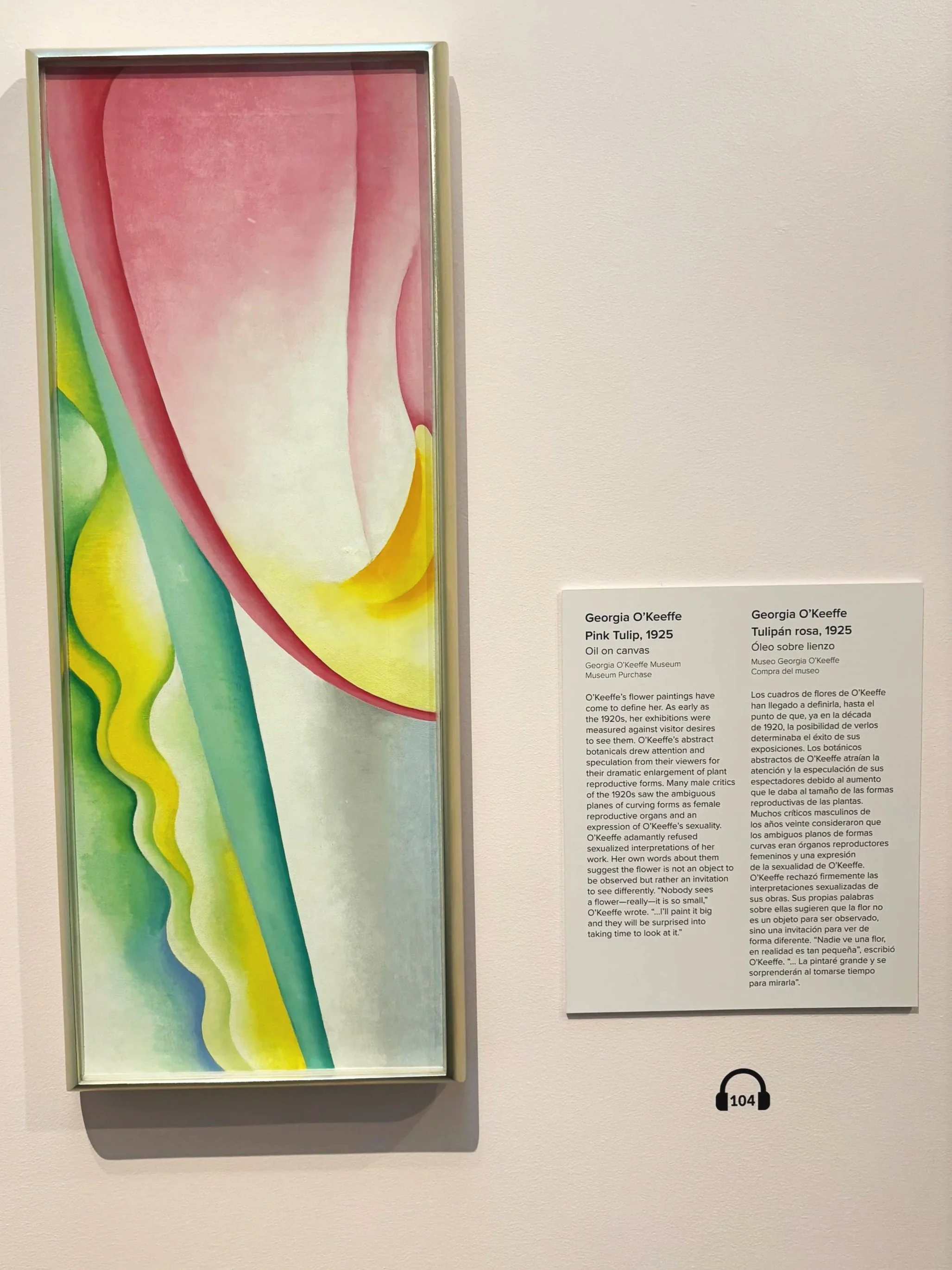
Georgia O’Keefe’s “Pink Tulip.” The feminine contained within the masculine.
We may or may not have control over our beginnings; I’m not sure that’s even the most useful question; there are limits to our control at every stage of life. Regardless of how and where our lives began, where we do have agency is in our ability to see and relate to ourselves more clearly, or at least with more dimension and nuance. We can look at the reflections through others - including the unflattering ones - and see how those reflections add texture and complexity to our self-understanding.
In this last decades-long year, many have asked, ‘how did we get here?’ To answer that, we may need to consider the extent to which the politics of cruelty, fear, greed and disavowal may in fact reflect something about us that we need to see. As residents at the top of the food chain, one could argue that we’re positioned to destroy ourselves; we have no other predator. That doesn’t mean we can’t try to be better. Where does our responsibility as individuals of this currently deranged prick of a nation -- and of this precarious world — begin and end? How might reconciling with our origins serve to illuminate and help determine the path that lies ahead — even if just to show us the next few steps?
For now, our time is up. I’ll see you next week.